

You Don't Need the Best Model — Why OpenDesign Looks Good on Any Engine
An honest test of the "any model" promise — if Claude Opus is great at design, does letting people pick any model make sense? Better Stack redesigns a real app using a budget model (GLM via OpenCode) and shows why OpenDesign's design systems + skills carry the output regardless of engine. Based on Better Stack's review.
There’s a fair skeptic’s question about OpenDesign: Claude Opus 4.7 is genuinely great at front-end design, so does letting people pick any model make sense — won’t most models be bad at design? This guide answers it by testing a budget model and seeing whether the result holds up. It follows the review Better Stack gives in their video, rewritten and brought up to date with the current release. Watch the video above, or read on for the written version.
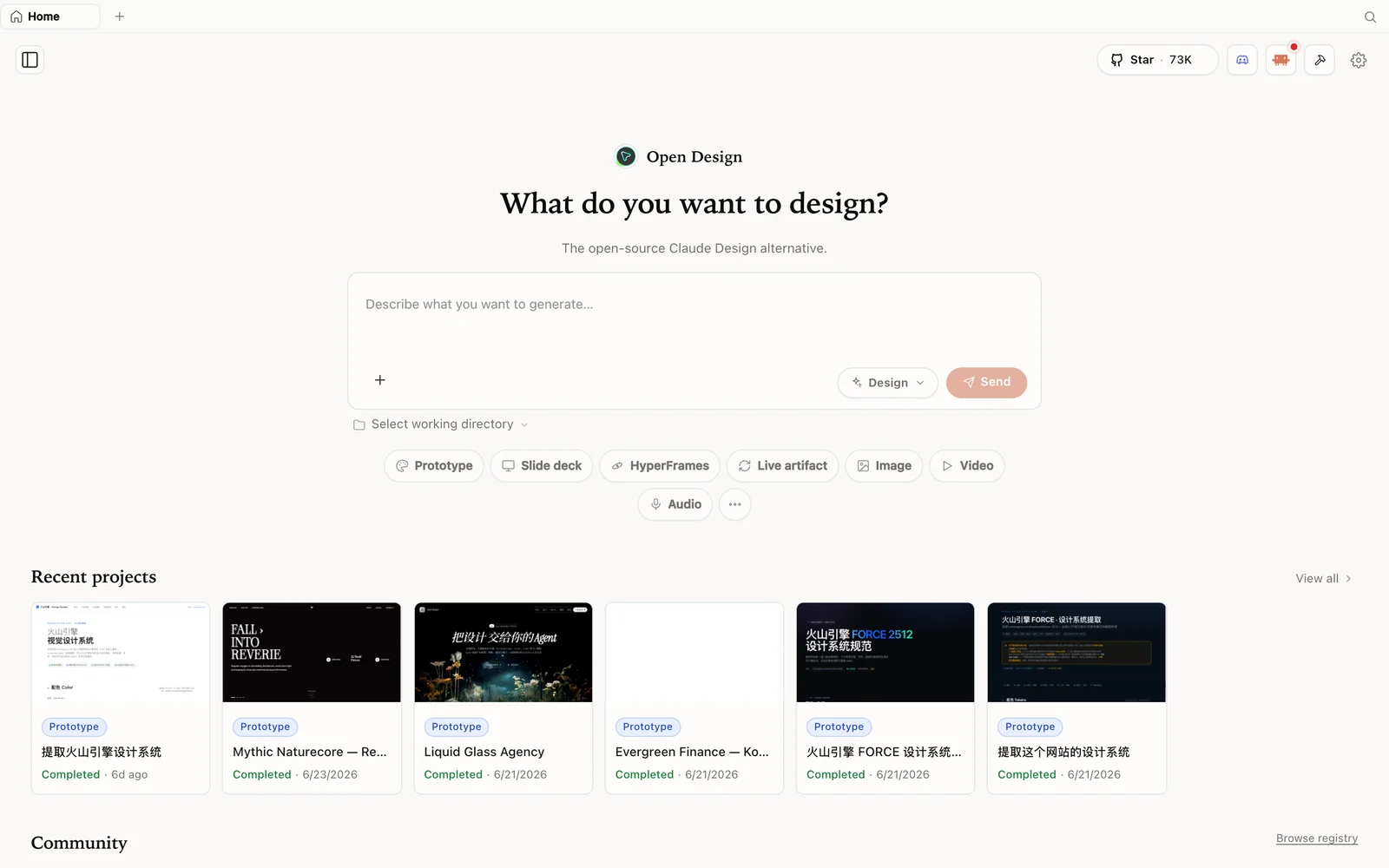 The OpenDesign workspace: describe what you want to build, pick a mode, and your agent does the rest.
What is OpenDesign?
OpenDesign is an open-source alternative to Claude Design that lets you use any agent or model you already have to generate web prototypes, mobile apps, and HTML slide decks — with a deep set of brand-grade design systems built in, and every project staying on your machine (nothing goes to the cloud). The closed tool is proprietary, cloud-only, locked to one model, and subscription-gated; OpenDesign removes all four constraints.
Why the output is good regardless of model
The skeptic’s worry assumes the model does all the design thinking. Better Stack’s key insight is that in OpenDesign, two things carry the quality so the raw model matters less than you’d expect:
- Design systems — full brand specs with typography, spacing, and color tokens, drawn from brands like Linear, Stripe, and Spotify. The look isn’t improvised by the model; it’s defined by the system.
- Skills — one per output type. A deck skill knows how to structure slides; a landing-page skill knows the sections. There’s even an anti-AI checklist baked into every prompt, and before generating, it asks about your audience, tone, and brand.
So the model isn’t freestyling a design — it’s executing a well-specified system. That’s why even a non-top-tier model produces something genuinely presentable.
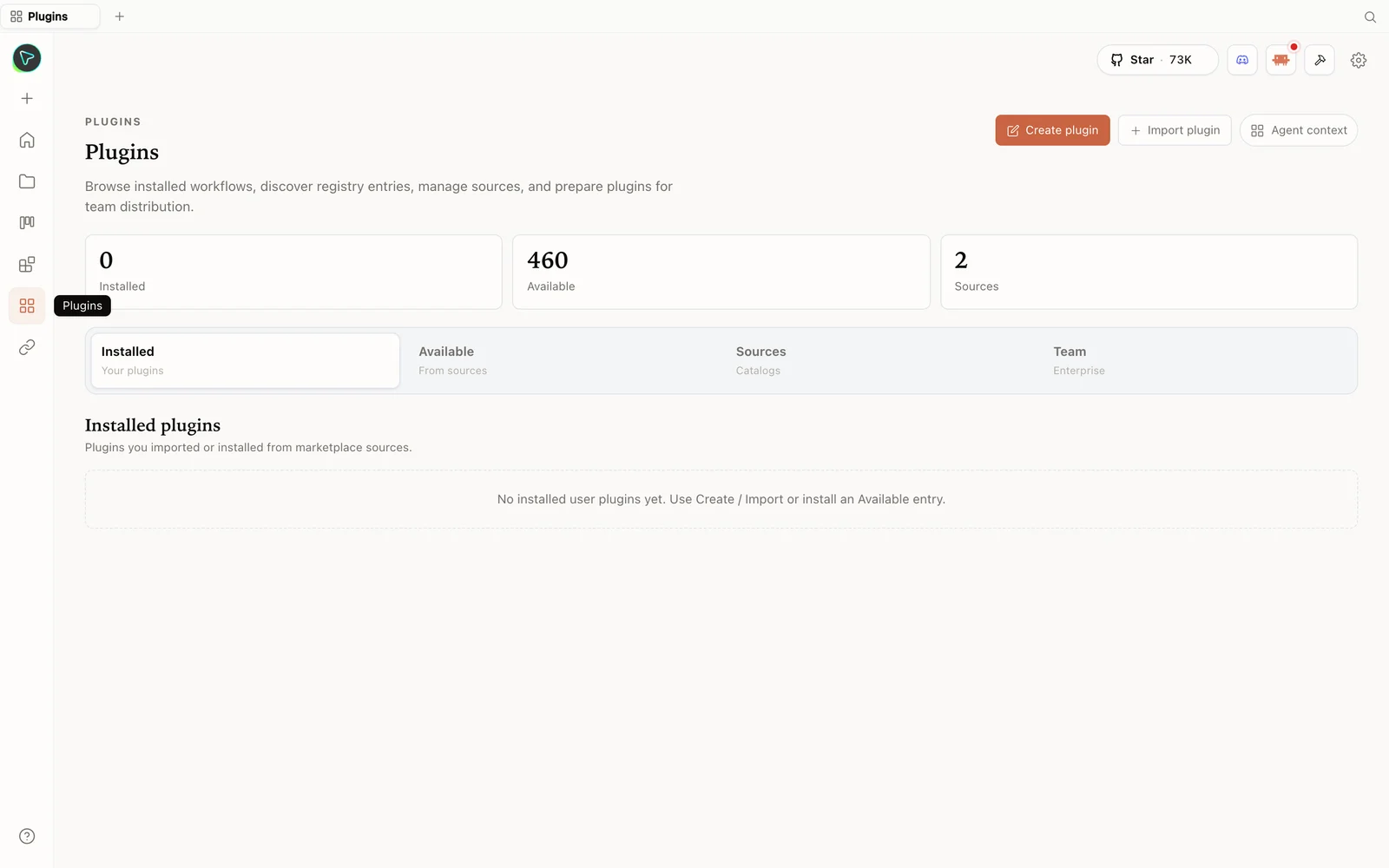 The plugins hub: browse the registry, import plugins, and prepare them for your team.
Step 1 — Install and pick a (budget) model
Download for macOS/Windows, clone and run with Docker, or run from source. With it running, open the local URL. The settings show the agent harnesses it detected — Claude Code, Codex, OpenCode. Better Stack deliberately picks OpenCode and switches the model to a budget option (GLM) to stress-test the “any model” claim. (Codex even lets you set reasoning effort; media providers like GPT Image and ElevenLabs can be wired in too.)
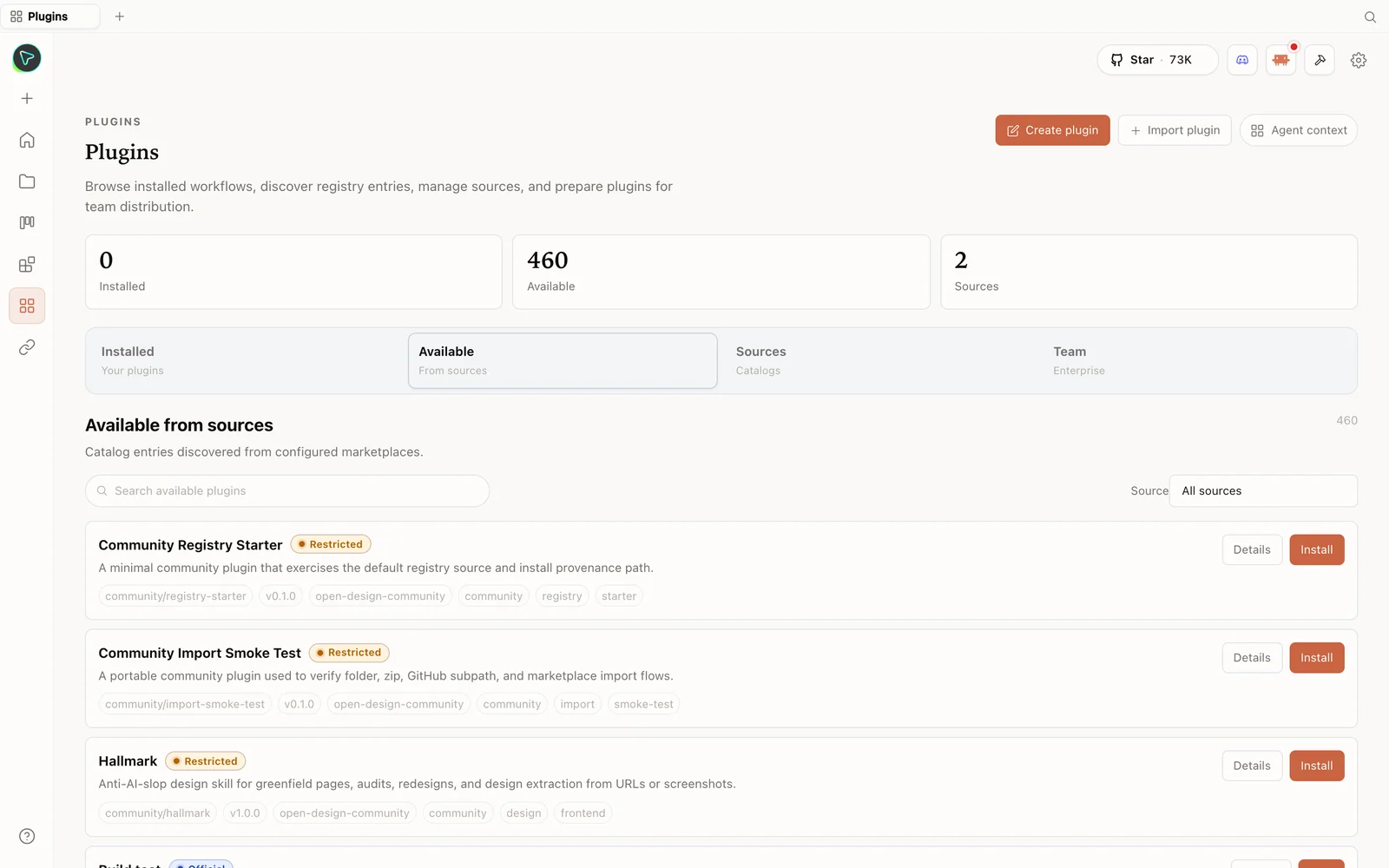 The plugin library: install skills straight from the registry — including anti-slop design skills.
Step 2 — The stress test: redesign a real app with a budget model
Pick a design system (Better Stack likes the Miro one — it shows tokens and a DESIGN.md), choose Prototype, and give it a real task: redesign an existing app. Better Stack passes the URL of a live app and asks for a better-looking version. OpenDesign’s agent runs the discovery questions, then uses its agent browser to actually visit the site, read the inputs and pages, and pull real data — no manual copying. About twenty minutes later (the budget model isn’t the fastest), it’s produced a clean, multi-page redesign — search page with advanced filters, results using real data, a favorites page, a hidden/archive state — all on a non-Claude budget model. The verdict: the design systems + skills carried it.
Step 3 — Finalize and ship
When done, finalize the design package to synthesize everything (transcript, design system, artifacts) into a single DESIGN.md, or Share to export in different formats — standalone HTML to hand to Claude Code for your real project, or deploy to Vercel or Cloudflare Pages.
The honest verdict
Better Stack is even-handed: if you already pay for a coding agent (other than Claude) and have a rough idea of the direction you want, OpenDesign is a no-brainer — the design-systems-plus-skills combo means it produces something decent regardless of the harness or model. The fair caveat: it assumes you know a bit about design (it asks you to pick a design system up front), and a top model still edges out a budget one on the finest polish. But the core claim holds — you don’t need the best model to get a good result.
Tips
- Don’t over-index on the model — pick a design system and a skill; those carry the look.
- A budget model (GLM/DeepSeek/etc.) is fine for most design work; save the top model for final polish.
- Hand it a URL and let the agent browser read the real site/app to redesign it.
- Finalize the design package to get one clean
DESIGN.mdfor handoff. - Export HTML or deploy to Vercel/Cloudflare to ship.
FAQ
Does it make sense to use a non-Claude model for design? Yes — OpenDesign’s design systems and skills define the look and structure, so even a budget model produces presentable output. A top model only edges ahead on the finest polish.
Can it redesign an existing site/app? Yes — give it the URL; the agent browser visits the site, reads its pages and data, and builds a redesign from that.
Who is it best for? People already paying for a coding agent (other than Claude) who have a rough sense of the design direction they want.
Is it free? The app is open source under Apache-2.0 and free to run locally. You only pay for the model and media usage of whichever agent and providers you connect.
This written guide is based on Better Stack’s review. Watch the full video above, and subscribe to Better Stack for more practical AI-tool tests.